 Lambton Family Hub
StoriesSt. Clair TownshipThe river off Corunna
Stag Island, the forgotten resort
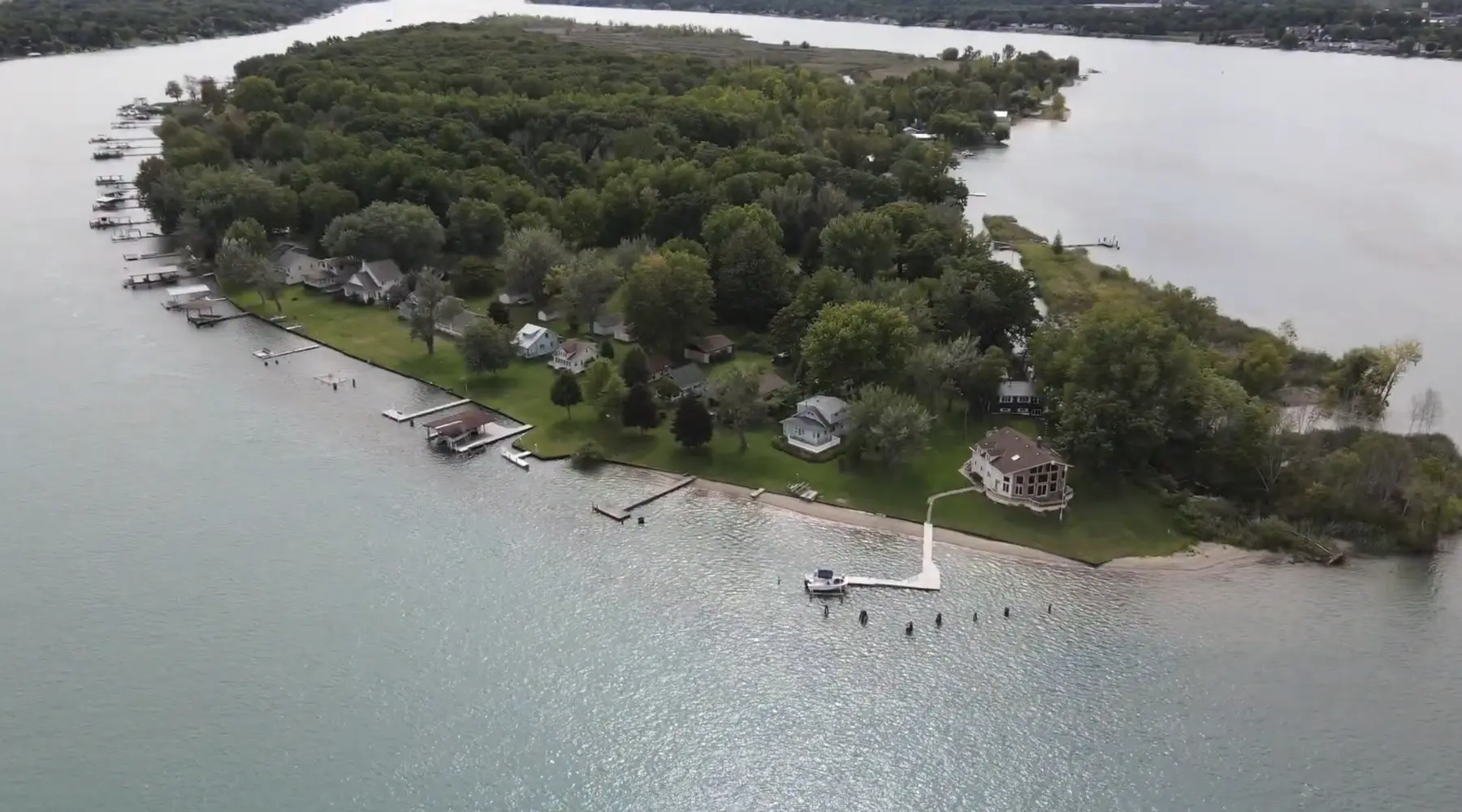
The quiet cottage island in the St. Clair River was once one of the busiest summer destinations around, reached by steamer and filled with a hotel, cottages and dancing.
A hotel, a dance pavilion and a steamer at the dock.
About this story
Stand on the riverbank at Corunna and the island across the water looks like what it is now: a quiet cottage community, private, with docks and boathouses along the shore. For a few decades either side of 1900 it was something else. Excursion steamers tied up at its dock, families came for the day or the summer, and there was a hotel, a dining hall and a dance pavilion to fill the evenings. This is the story of how a river island became a resort, why the resort faded, and the older history underneath it.
01 / The resort years
From river island to summer resort
Stag Island was named for the deer once associated with it. By the late nineteenth century, passenger steamers had made river excursions a popular form of recreation, and the island's position between the Canadian and American shores made it a natural stop.
Around 1890, Nelson Mills of Marysville began developing Stag Island as a resort. Historical records describe cottages, a hotel, a dining hall, a dance pavilion and other recreational facilities. Visitors arrived by steamer to spend summer days boating, fishing, bathing and socializing on the river.
02 / By steamer and steam yacht
Getting there was part of the adventure
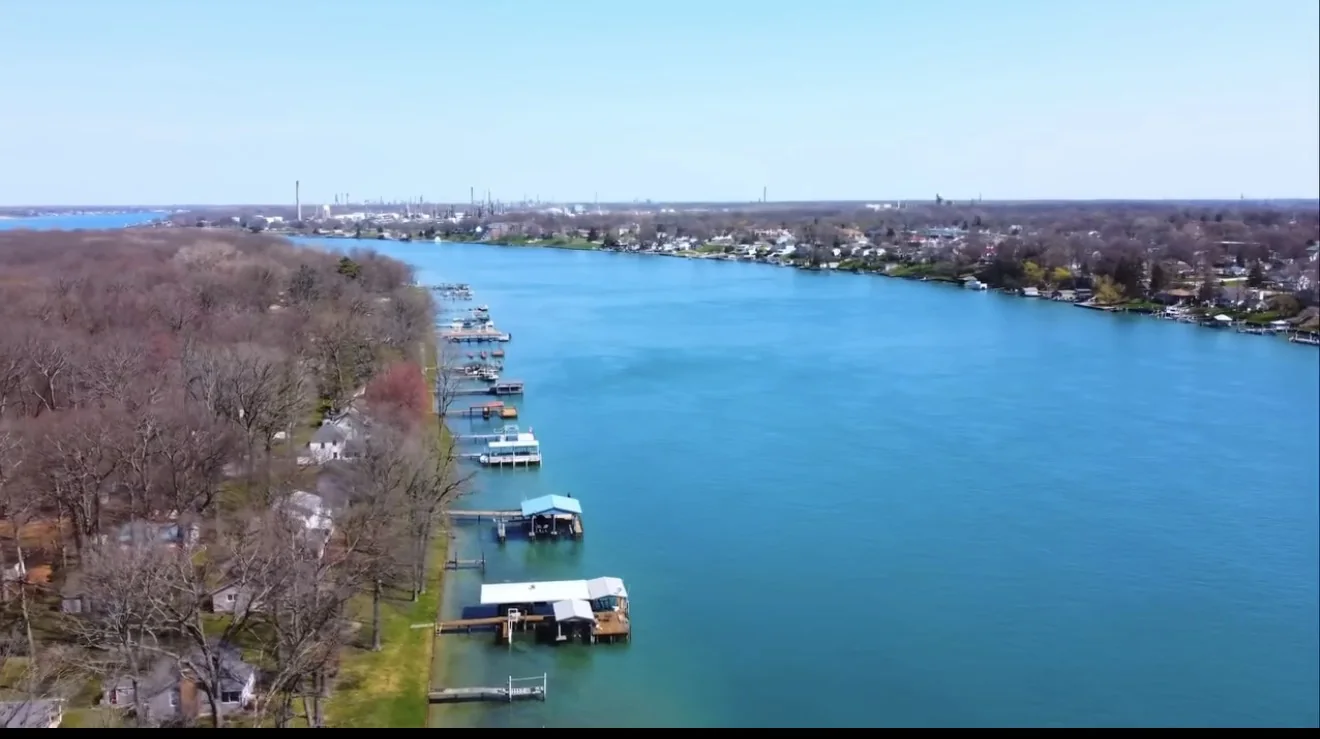
Before family car trips became ordinary, excursion boats such as the Tashmoo and Greyhound carried passengers along the St. Clair River. In 1900, a steam yacht operated by the David family also carried visitors between Corunna and Stag Island.
The David brothers added a tintype photography business for passengers and offered small excursions up Talfourd Creek. The Moore Museum records one especially memorable local tale: passengers were promised a look at rare albino turtles, until someone scraped white paint from one of the turtles.
Passengers were promised a look at rare albino turtles, until someone scraped the white paint off one.
03 / After the steamers
Why the resort faded
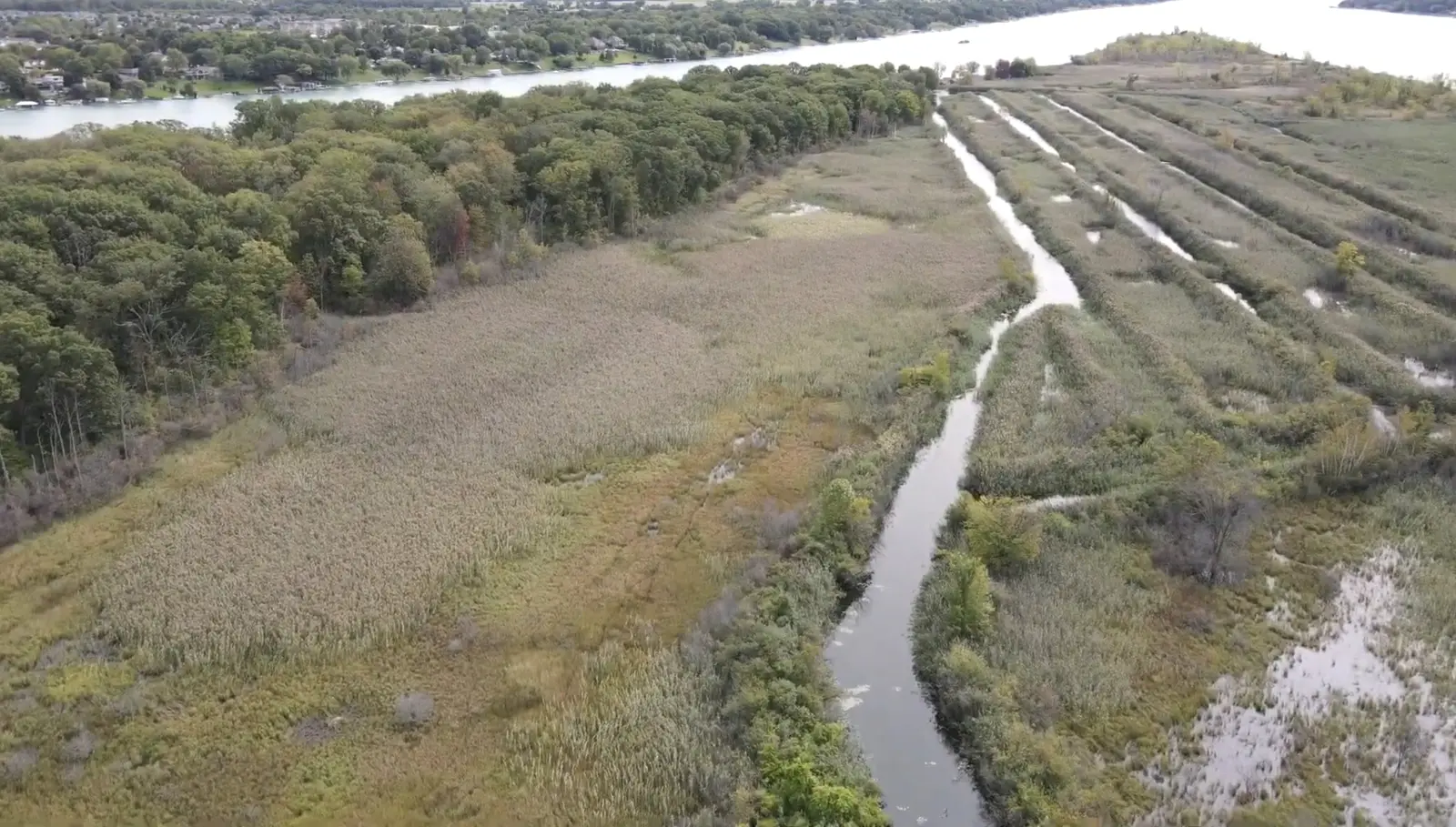
As automobiles became the preferred way to travel, river excursions declined. Without the same stream of steamer passengers, the resort era gradually ended. Stag Island remained a summer community, but its grand public-resort identity became part of local history.
The island's history reaches far beyond its hotel and steamers. When Treaty 29 ceded the Huron Tract to the Crown in 1827, the Chippewa of the St. Clair River kept the islands in the river, Stag Island among them. It later changed hands in a trade the Sarnia Historical Society has told in full: the island, exchanged even up for a 400-acre sugar bush near present-day Petrolia. Including that history makes the island's story more complete, and avoids beginning its past only when the resort was built.
The dates
- 1827
- Treaty 29 ceded the Huron Tract to the Crown while the Chippewa retained islands in the river, including Stag Island.
- Mid-1800s
- The island was later exchanged as part of a land transaction involving a 400-acre sugar bush near present-day Petrolia.
- About 1890
- Development of the island as a summer resort begins.
- Early 1900s
- Hotels, cottages, dining, dancing and steamer excursions draw summer visitors.
- Today
- The island is occupied by private cottages rather than operating as a public resort.
Keep reading
More stories from the water.
Sarnia
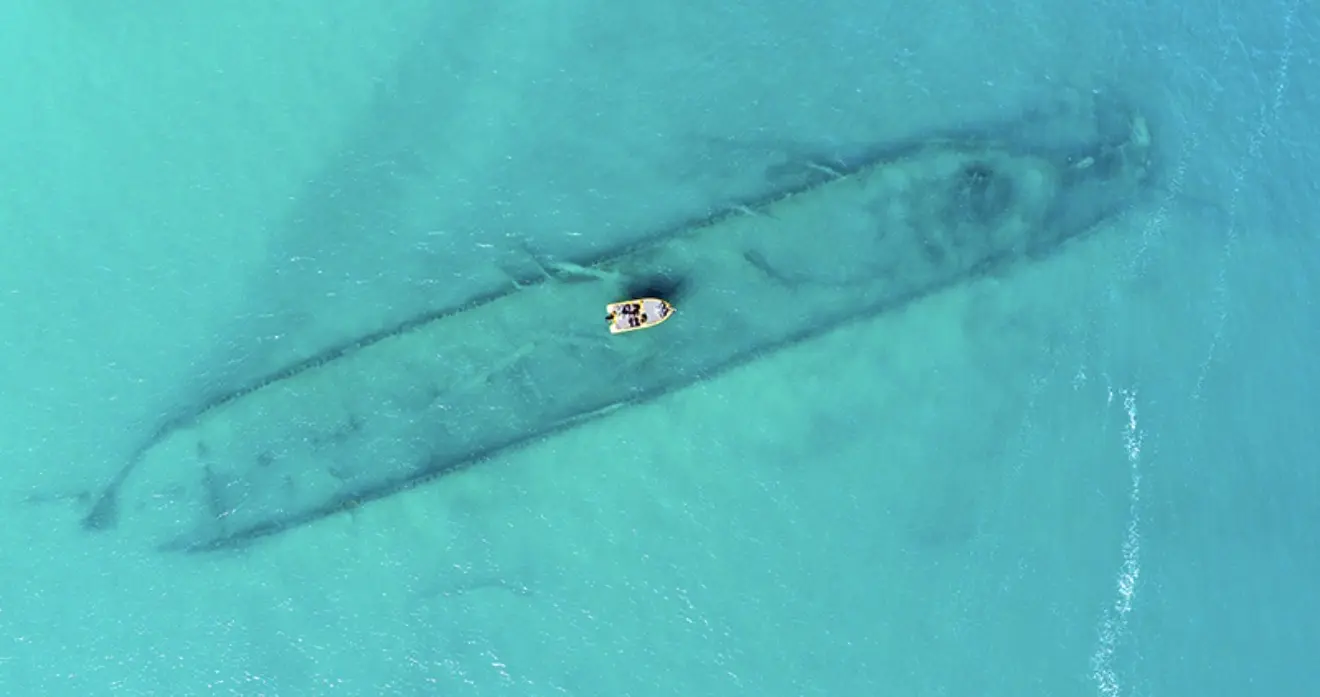
The shipwreck beneath Canatara Beach
An 1888 wooden freighter lies in shallow water just off the sand, towed there as a breakwater in 1923. It still surprises lifelong Sarnians.
Sarnia
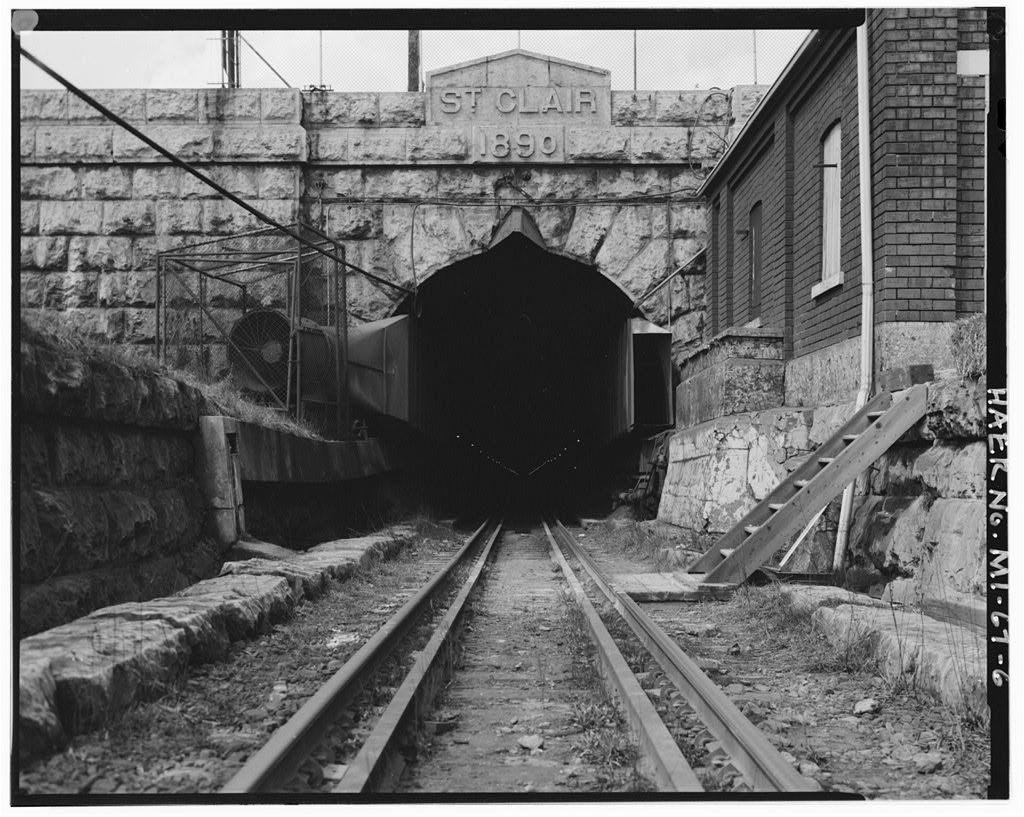
The railway that went under the river
In 1891 the Grand Trunk dug the first international submarine railway tunnel in North America beneath the St. Clair. Then it had to work out how to breathe down there.