 Lambton Family Hub
StoriesPetroliaWith Oil Springs and Enniskillen next door
The oil town, in five stories
The town that taught the world to drill.
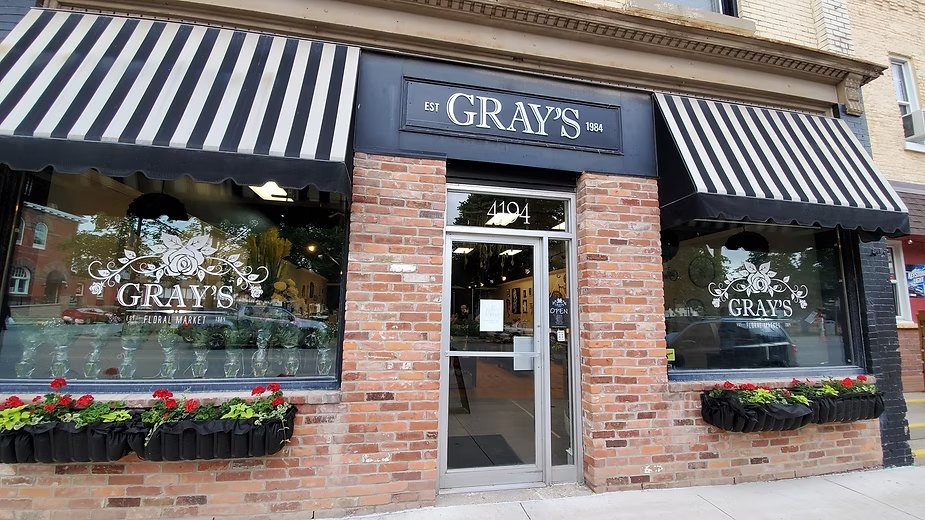
Oil money built the town. Curiosity is what keeps it.
About these stories
Petrolia is a small town with an outsized past. For a few decades in the late 1800s the wells around it supplied most of Canada's oil, and the money that came up with it built a main street of brick, gingerbread trim and an opera house that still runs a professional theatre season. Children notice the pumpjacks first. The rest of the story is worth telling them on the drive in.
These are the stories that make a day here different from a day anywhere else: three about the oil, and two the town tells on itself. Where a story ends at a place you can visit, it ends with what you need to go; the Petrolia guide has the parks, the market and the rest.
Walk Petrolia Line slowly.
Look up at the second storeys. That is where the oil money went.
01 / Hard oilers
The town that taught the world to drill
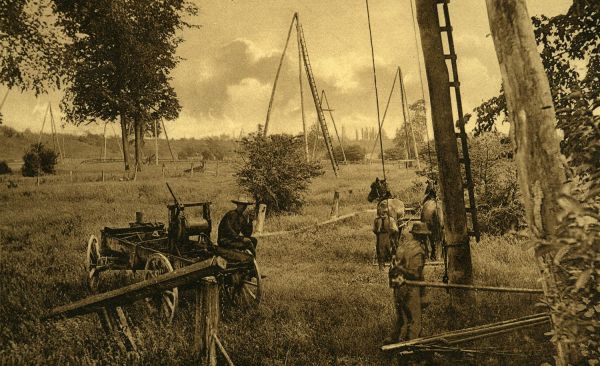
Oil was struck at Oil Springs, ten minutes south of here, in 1858. It was the first commercial oil well in North America, and within a few years the boom moved north to Petrolia, where the field was bigger and the town grew up around it almost overnight. By the 1870s and 1880s, Petrolia was one of the wealthiest towns per capita in Canada.
The men who learned to drill here did not stay put. Companies around the world hired Petrolia's oilmen for their hard-won expertise, and they carried it to Persia, Sumatra, Russia, Borneo and the Gobi Desert, eighty-seven countries in all. Lambton's oil drillers who travelled overseas became known as the Hard Oilers, and their letters home are part of the town's archive.
You can still see how it was done. Petrolia Discovery keeps a working 1860s-style oil field running on the edge of town, with the wooden jerker-line system that ran dozens of wells from a single engine, and a rig that has been in service since 1903.
02 / Brick and gingerbread
Victoria Hall, and the money that built it
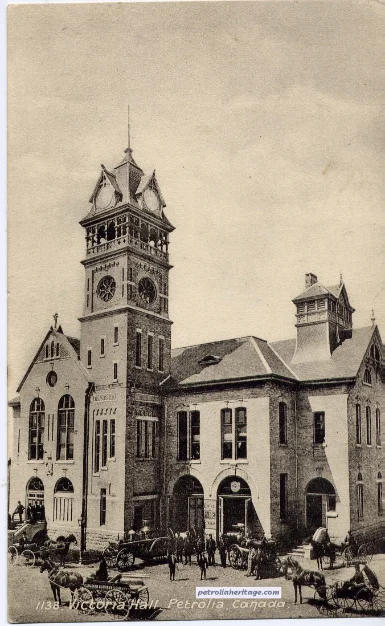
Oil wealth needed somewhere to go, and in Petrolia it went into buildings. Victoria Hall, finished in 1889, served as Petrolia's town hall and opera house, with a clock tower you can still use to find your way back to the car. Beginning in 1913, the town's farmers' market operated in a separate market building beside it. Victoria Hall anchors a downtown of Victorian storefronts and gingerbread-trimmed houses that the oil barons built for themselves.
The hall never stopped performing. Victoria Playhouse Petrolia runs a full professional theatre season inside it, an unusual thing for a town this size, and a good reason to plan an evening here with older children.
03 / Ten minutes south
Oil Springs, where it started
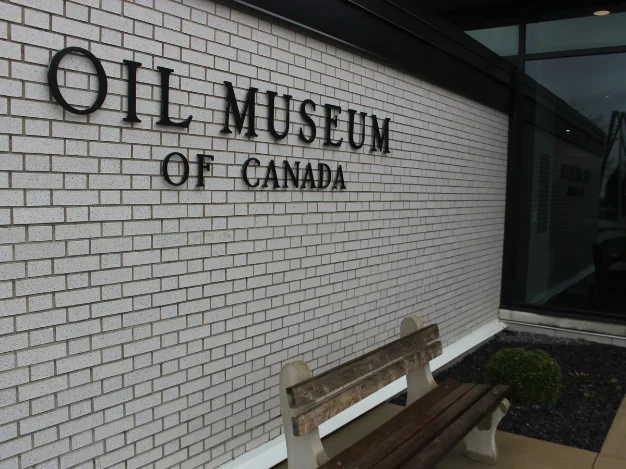
In 1858 James Miller Williams dug a well at Oil Springs and struck oil. The Oil Museum of Canada now stands on that site, with galleries indoors and the field outside, and it is the clearest way to show a child what the pumpjacks along the county roads are for.
Next door, Fairbank Oil Fields is the world's oldest oil company still in operation, run by four generations of one family and pumping with the wooden jerker-line system devised in the 1860s.
- 1858
- Oil Springs. James Miller Williams strikes oil at the first commercial well in North America.
- 1860s
- The boom moves north. Petrolia's field proves larger, and the town grows up around the rigs.
- 1876
- The fair begins. The Petrolia & Enniskillen Agricultural Society is founded; its fall fair still runs every fall at Greenwood Park.
- 1889
- Victoria Hall opens. Town hall and opera house under one clock tower; the farmers' market building came in 1913.
- 1903
- Still pumping. A rig at Petrolia Discovery enters service. It is in service today.
04 / Stories the town tells
Ghosts on the walk back to the car
Local lore keeps a "Grey Lady" in one of the grand Victorian houses along Petrolia Line, and a former resident nicknamed Mr. Hirst who is said to linger there still, frock coat and cigar included, in a building that is now a restaurant. Nobody promises you will see either one. Tell the children on the walk back to the car, not before bed.
05 / On screen
Sunnyside, the mansion that became a film set
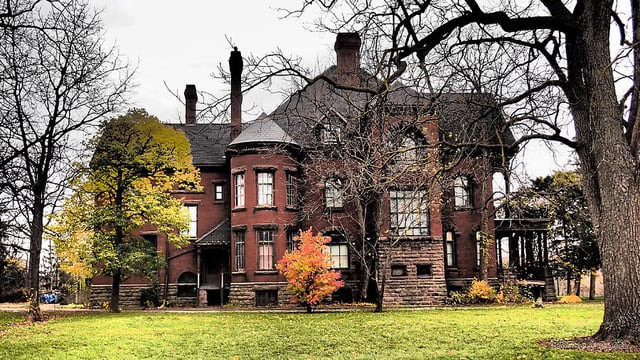
Oilman John Henry Fairbank, the engineer whose jerker-line system is still pumping wells across the county, built the 22-room mansion Sunnyside in 1890 on the fortune it made him. Locals just as often call it the Fairbank House. It is a private home today, best seen the way most people see it: from the street on a walk down Petrolia Line. In 2018 it stood in as a haunted house on screen, when Guillermo del Toro's horror film Scary Stories to Tell in the Dark shot scenes there.
Then and now
Greenwood Park
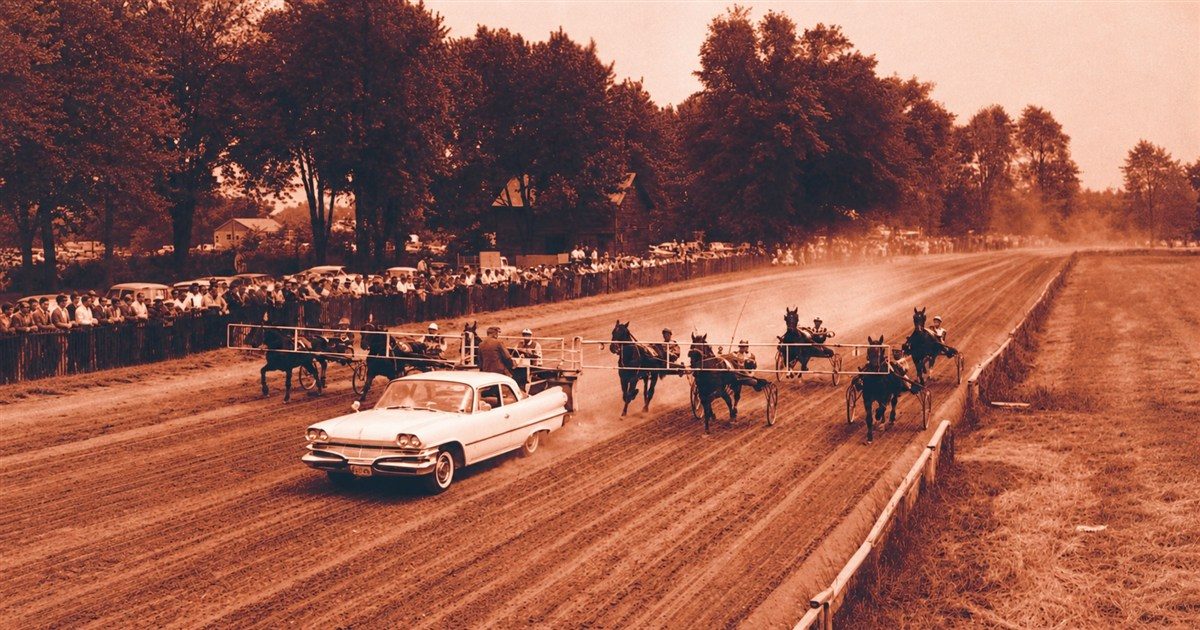
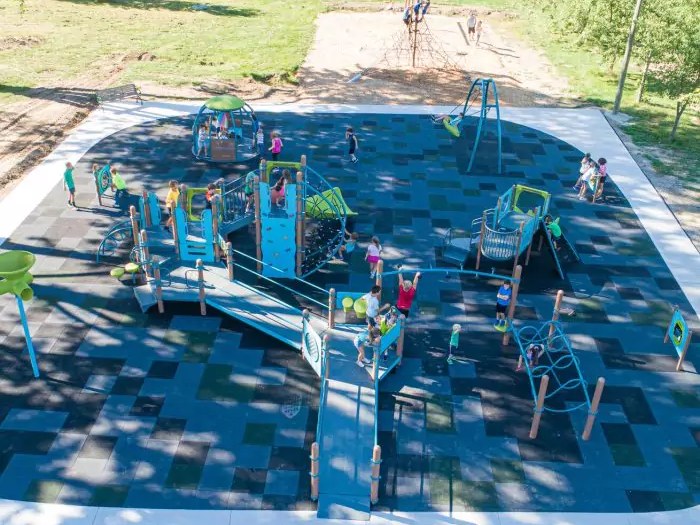
Greenwood Park has been the town's fairgrounds since 1876 and its everyday green space the rest of the year. The playground was rebuilt accessible: a poured-rubber surface that works for wheelchairs and other mobility devices, not just running shoes, with inclusive equipment alongside the usual climbers and swings.
Keep reading
More stories from Lambton.
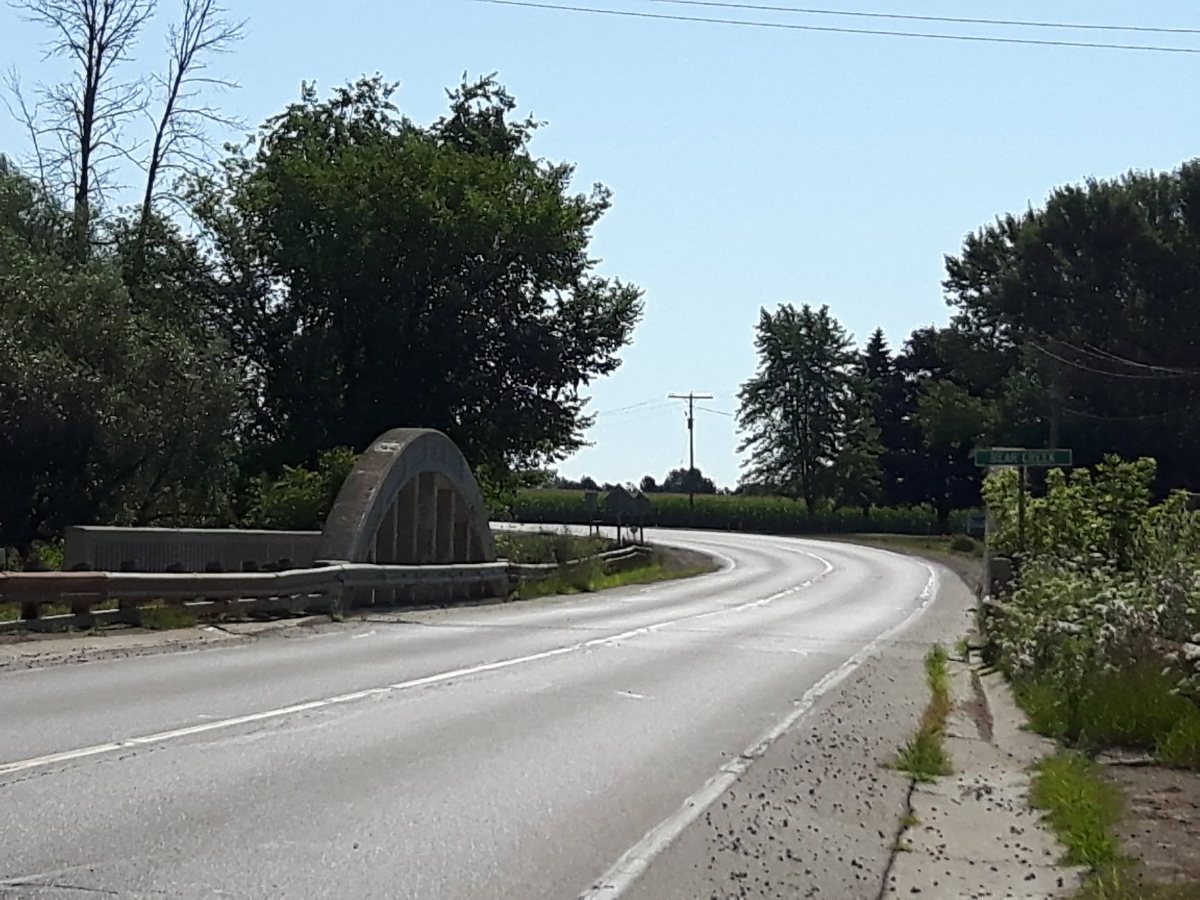
Warwick Township
The township, in four stories
The old road and the village the railway made, a Carnegie library that still lends books, a car built by hand in Watford, and a wetland that was never drained.
Sarnia
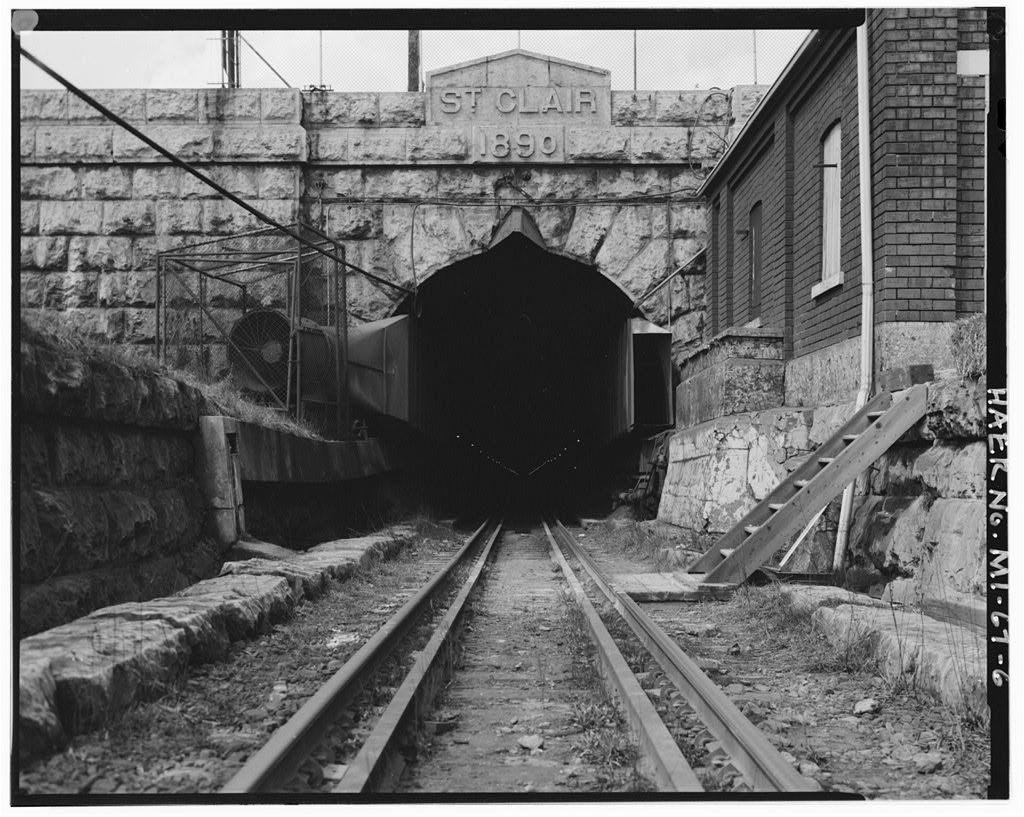
The railway that went under the river
In 1891 the Grand Trunk dug the first international submarine railway tunnel in North America beneath the St. Clair. Then it had to work out how to breathe down there.
Historical notes draw on the Oil Museum of Canada, Petrolia Discovery, Fairbank Oil Fields and the Town of Petrolia, checked in September 2026. The Grey Lady and Mr. Hirst are local lore and are reported here as such. Opening, prices and availability can change, and the links take you to the current details. Suggest a correction.