 Lambton Family Hub
Lambton Shores with the family
A century-old picture house.
A waterfall older than the dinosaurs.
Country roads that still tell you what grows here.
We don’t endorse the businesses we list, and they don’t endorse us. We list places we genuinely enjoy. Sponsors are always marked as such.
In this guide
Make a day of it
One municipality. Three inland stories.
Lambton Shores stretches from the Lake Huron shoreline far inland. It takes in Forest, Arkona, Thedford, Grand Bend and Port Franks, along with Pinery Provincial Park, conservation areas, orchards and a lot of country road in between.
This guide does not try to cover all of it. It heads inland to spend time in three communities, Forest, Arkona and Thedford, and leaves the beaches to their own guide. If you are planning a Grand Bend, Port Franks or Pinery day, start with the Grand Bend guide instead.
Start with one story.
Build the rest of the day around it.
01 / Forest
A town that kept its gathering places.
Forest has a way of reusing its history rather than putting it behind glass. A century-old theatre still shows movies downtown. The public library stands on the old railway station site, in a building designed to recall the station that once stood there. At the south end of town, a natural amphitheatre turns a hillside, a lake and a small island into an outdoor stage.
These are not recreated attractions built for visitors. They are places the community still uses.
The picture house
Saturday night, since 1917.
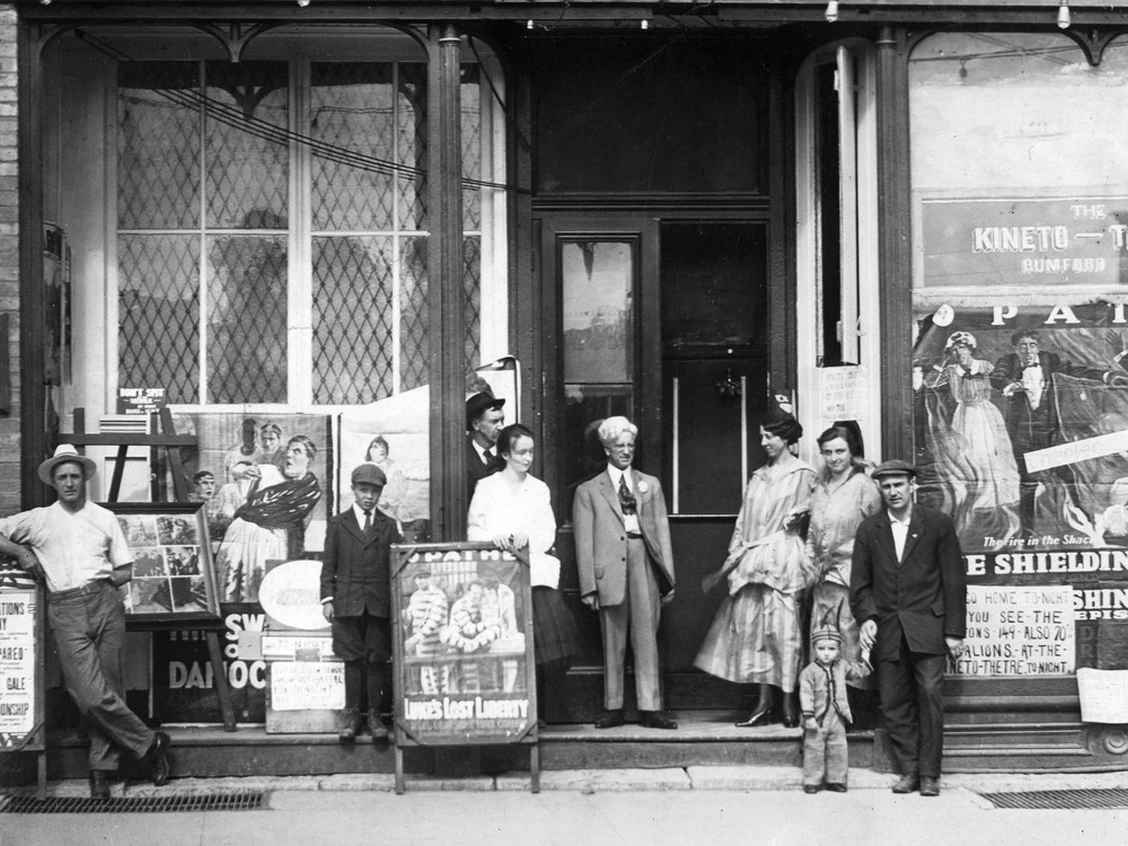
Forest had moving pictures before it had a movie theatre. Around 1905 the Rumford brothers, Floyd, Marty and Tommy, began showing films in the gallery of the old town hall, running an all-brass Kineto projector imported from England off a generator rigged to the back wheel of a Ford.
In 1917 the brothers bought a building on what was then Front Street and made it Forest's first permanent movie house, naming it for the projector. The films were silent, so Floyd and Marty ran the projector while Tommy played the drums and a pianist supplied the horses' hooves, the trains and the crashes. Children under sixteen got in for fifteen cents.
When the Rumfords were ready to sell, the Kiwanis Club of Forest bought the Kineto in 1977 for eighteen thousand dollars, and volunteers have run it as a non-profit ever since. It is one of the oldest continuously operating movie theatres in the world, and on a show night the volunteers walking the aisles are your neighbours.
The station that became a library
Forest still has a railway station. Sort of.
For generations, arriving in Forest meant arriving by rail.
The Grand Trunk Railway built its first Forest station in 1860. Fire destroyed that simple frame building in 1898, and a new station followed in 1901.
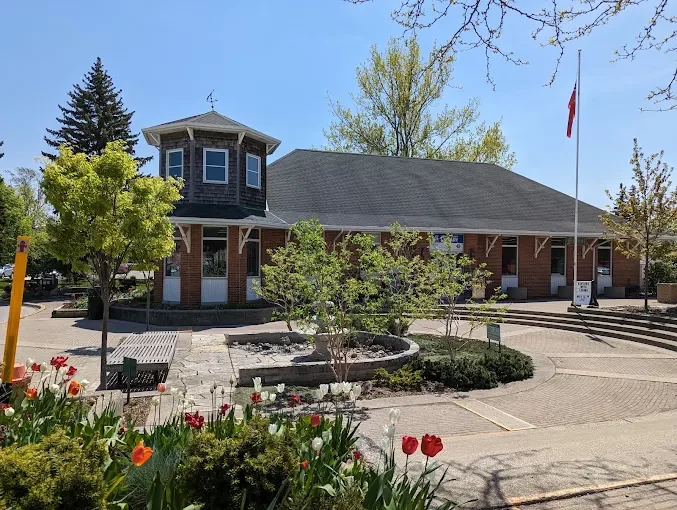
The railway eventually disappeared from everyday life, but the station did not disappear from Forest's identity. In 1985, the community built its public library on the former railway station site. Historic drawings were used to create a modified replica of the earlier station, giving a modern public building the shape and character of something the town had lost.
Today, it is still a working library. Look at the building before you go inside: the railway story is part of the architecture.
An outdoor stage built into the land
The amphitheatre at Esli Dodge
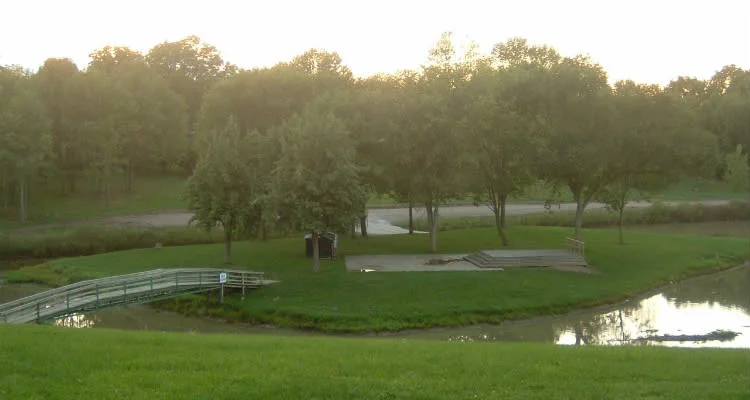
At the south end of Forest, the stage is an island. Esli Dodge Conservation Area contains one of the community's most unusual gathering places: a natural amphitheatre shaped by the slope of the land around a small man-made lake.
For performances and celebrations, the hillside becomes the seating area. Families bring lawn chairs and blankets, looking across the water toward the island used as the stage.
Lambton Shores lists room for more than 6,000 people on the hillside, but even without an event underway, the setting is worth noticing. The surrounding conservation area includes walking paths, picnic space, a playground and room to spend some time outside.
88 Main Street South, Forest
Check the Lambton Family Hub event listings or the Municipality of Lambton Shores schedule to see whether anything is happening at the amphitheatre during your visit.
02 / Deep time
Arkona: where the ground tells the story
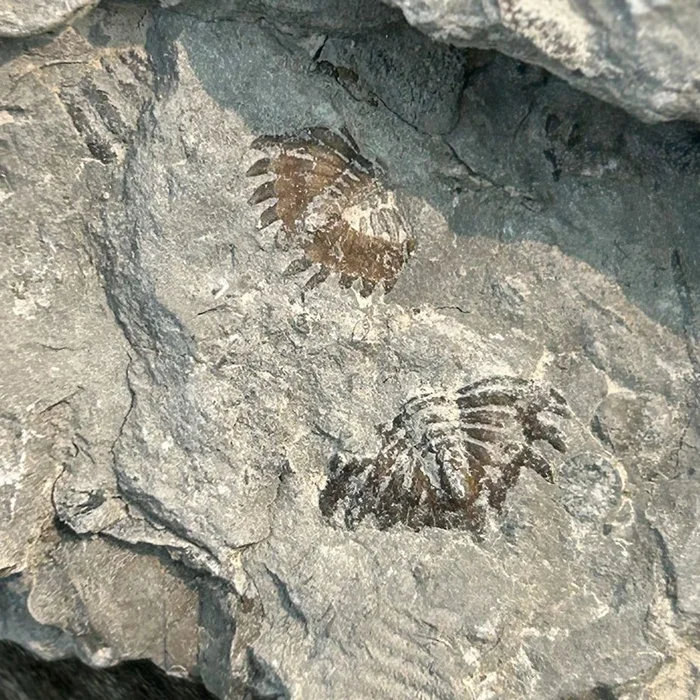
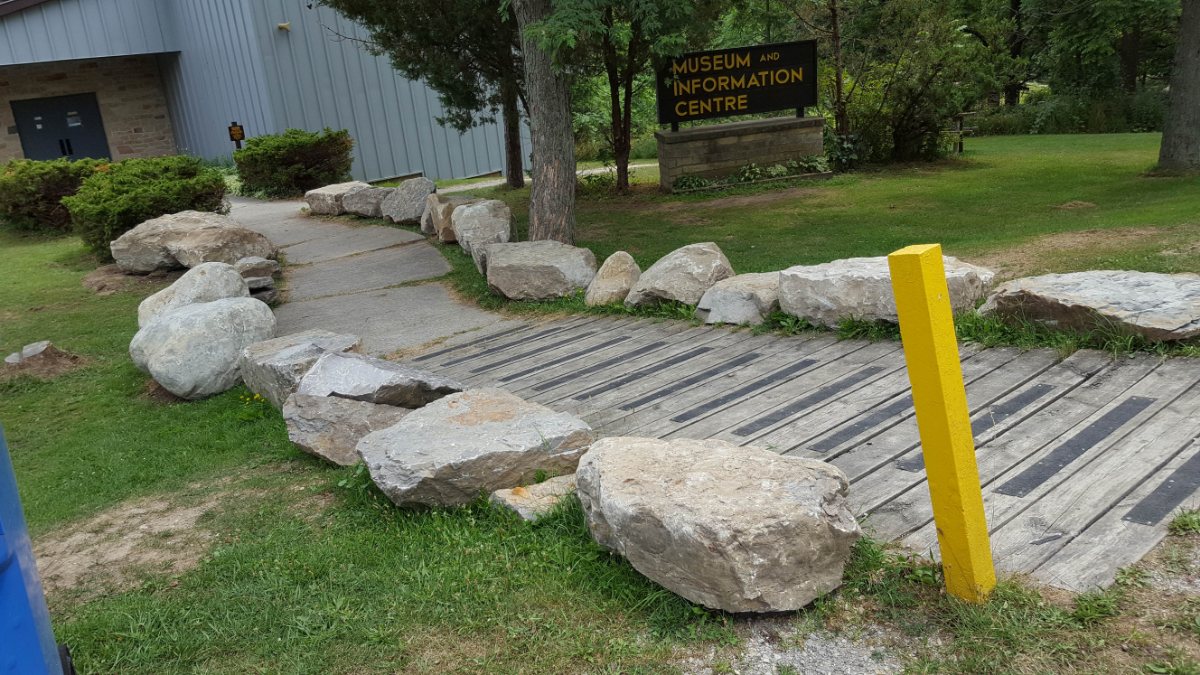
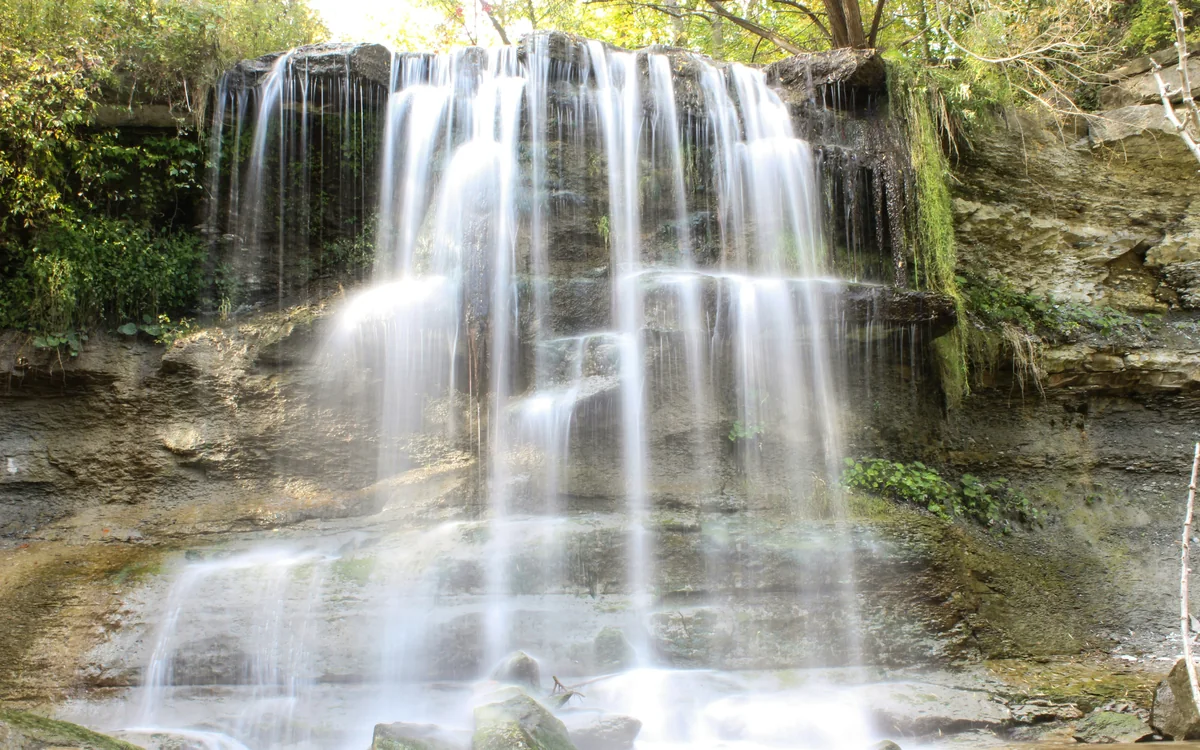
At Arkona, the Ausable River drops about eleven metres into a gorge and keeps cutting. Rock Glen Conservation Area holds the falls, the gorge below them, and a stretch of Carolinian forest, the southern hardwood woodland that reaches only this far north in Canada. Stairs and boardwalks lead from the rim down toward the water, over uneven ground that makes sturdy shoes worth the trouble. The sound of the falls reaches the boardwalk before the view does.
The gorge walls are the reason people have come here for generations. They expose rock from the Devonian period, more than 350 million years old, laid down when this ground was the floor of a warm, shallow sea and sat close to the equator. The shale is full of what lived in that sea: brachiopods, horn corals, the stacked discs of crinoid stems, and now and then a trilobite, the big-eyed sea creature children recognise from museum drawings. Geologists know the layer here as the Hungry Hollow, and fossil collectors travel from other countries to see it. Current conservation-area rules allow one fossil per visitor to take home, and digging or using tools is not permitted, so a find has to be something the gorge has already given up on its own.
The easiest way to explain the rocks to a child is to stand at the bottom of the stairs and say it plainly: every layer above your head is a stretch of time, and the sea floor you are standing on is older than the dinosaurs, older than trees.
At the top of the gorge, the Arkona Lions Museum and Information Centre keeps a collection of fossils, minerals and local artifacts, seasonal hours and all. It is the place to see the rare finds side by side, and to put a name to whatever came up from the gorge.
Why this ground matters
Two things make Rock Glen more than a pretty walk. The first is the rock itself: an open page of the planet's history, readable by anyone who can climb a staircase, at a time when most such pages are buried or paved over. The second is the forest around it. Rock Glen sits at the northern edge of the Carolinian zone, the band of southern hardwood forest that covers about one per cent of Canada and holds more than a third of the country's species at risk. Most of that forest has been cleared since settlement, and what remains survives in pockets like this one. Walk it as something rare, because it is.
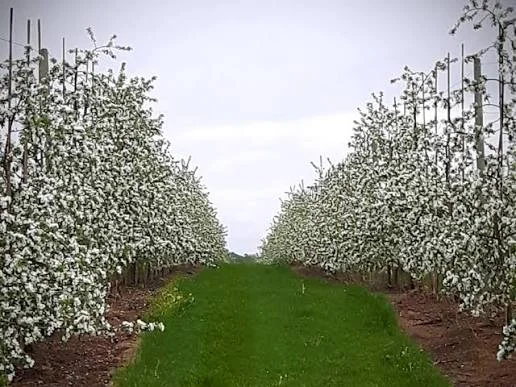
The Little Apple. Arkona has long used this nickname, reflecting the fruit-growing history around the community. Orchards and farm markets remain part of the landscape around the village, and Arkona's community website lists what's nearby.
03 / The drowned lands
Thedford: where lakes became farmland
Before the fields, there were lakes.
Early settlers called the land around Thedford the Drowned Lands: roughly 17,000 acres of wetland holding three shallow, marshy lakes, Lake Smith, Lake George and Lake Burwell. The ground was low and flat, the dunes along Lake Huron held the water in, and the rivers feeding the basin brought in more water than the land could shed.
Drainage changed that. Channels were cut, the water fell, and what it left behind was rich, dark soil built up over centuries under standing water. That soil is why the fields around Thedford became some of the most productive farmland in the municipality, and why the area is known for vegetable farming today.
At Rock Glen, water cuts into the land. Here, it gave the land back.
It takes some effort to stand in a Thedford field and picture three lakes underneath it. But the flatness, the dark soil and the drainage ditches are still the shape the Drowned Lands left behind.
Make it a date
Put together your visit
Programs this month
A library day
Forest Library, Arkona Library and Thedford Library are the three closest to the communities in this guide. Forest's own branch is sometimes still called the Station Library, standing on the site of the town's old railway station. Choose one and browse what's on this month.
See Forest Library calendarThe useful bits: four questions before you go
Where should we start?
For a first outing, choose the thing your family is most interested in: Rock Glen for nature and geology, Forest for the Kineto and a small-town afternoon, or Thedford when a community event, program or farm-country stop gives you a reason to head that way.
How spread out is everything?
Treat Forest, Arkona and Thedford as separate stops rather than one walkable destination. Driving is part of the day, so one main community plus one smaller stop is usually enough.
What works if the weather changes?
Check what is actually open that day. The Kineto can make a good indoor plan when a suitable film is showing, and Forest, Arkona and Thedford each have Lambton County Library branches with their own hours and programs. The Arkona Lions Museum at Rock Glen is seasonal, so verify its current schedule before relying on it.
What should we check before leaving?
Confirm hours, admission, seasonal facilities and registration requirements directly with the operator. For Rock Glen, check conservation-area notices and trail conditions. For libraries and recreation programs, check the current listing rather than assuming a regular schedule.
Sources & further reading
Historical notes draw on the Ausable Bayfield Conservation Authority, Lambton County Museums, the Municipality of Lambton Shores and the St. Clair Region Conservation Authority. Twin Pines Orchards & Cider House is credited directly for its own current details. Programme details were checked against the linked municipal, library and operator sources in September 2026; opening, prices and availability can change, and the links take you to the current details. Suggested outings are our planning ideas, not venue schedules. Suggest a correction.