 Lambton Family Hub
Bright’s Grove, beyond the beach
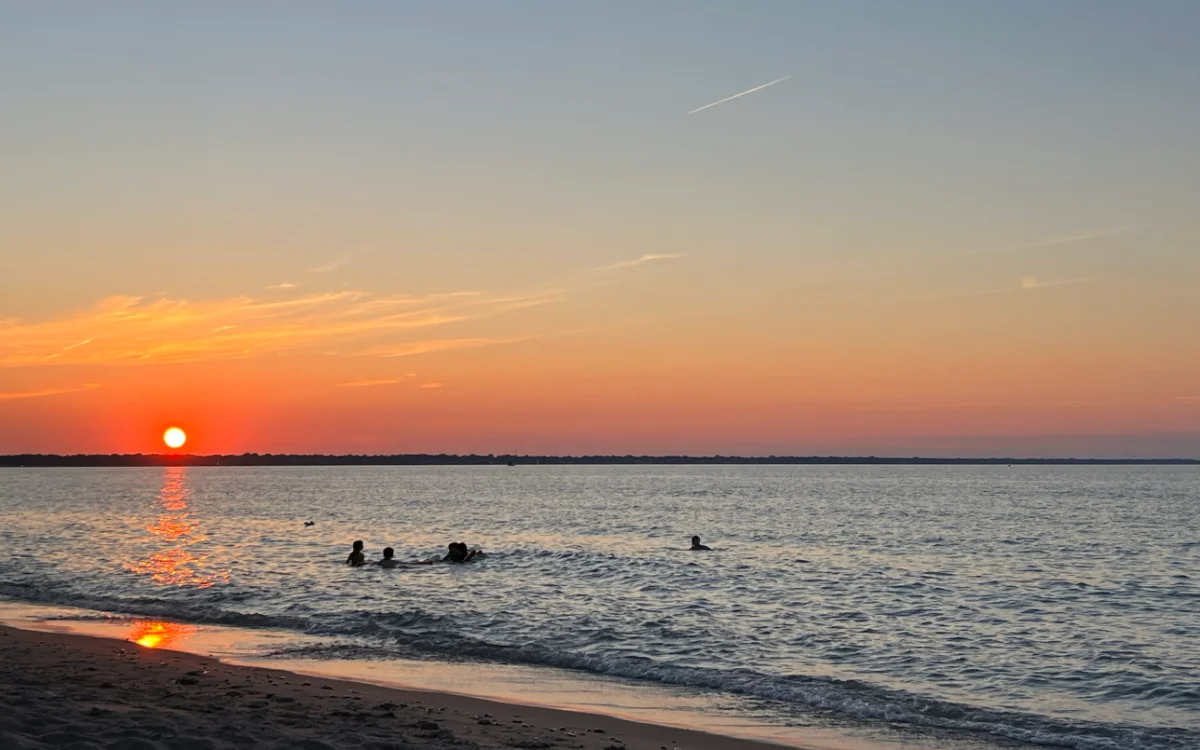
A radical experiment in living together. A dance pavilion on the lake.
A local golfer who won the Masters.
We don’t endorse the businesses we list, and they don’t endorse us. We list places we genuinely enjoy. Sponsors are always marked as such.
In this guide
01 / A bold beginning
Maxwell: a different way of living
In 1829, retired Royal Navy purser Henry Jones established Maxwell on Lake Huron. He followed the ideas of British social reformer Robert Owen: people could organise work and everyday life cooperatively, with property held in common. The Ontario Heritage Trust commemorates the settlement under the title “Canada’s First Commune.” That title refers to this particular Owenite experiment.
The most revealing detail is the house. Families had their own rooms, but shared kitchens and dining space. A school and storehouse formed part of the community. Cooperation shaped the practical arrangements of everyday life.
Jones’s ambitions had roots in the upheaval of industrial Britain. His plans connected displaced workers with Owen’s ideas about improving difficult working conditions. The shared house was part of an attempt to organise a different kind of working community.
Maxwell did not become the enduring community Jones hoped for. Settlers left, and the communal house burned. Its central question still makes a good family conversation: how much of your everyday life would you want to share with your neighbours?
Read further: Henry Jones, Dictionary of Canadian Biography · Lambton County Archives
02 / Music by the lake
Kenwick-on-the-Lake: the dancing years
By the summer of 1946, musician and promoter Jack Kennedy was operating Kenwick-on-the-Lake on Lake Huron. It belonged to the world of live orchestras and dance pavilions: an evening out meant hearing musicians perform while people danced.
Kennedy also ran Kenwick Terrace in downtown Sarnia. They were separate venues—a distinction that matters when tracing the performers associated with the Kenwick name.
Peter Young’s history of Ontario’s dance halls places Kenwick-on-the-Lake among the outdoor venues that developed around the province. He identifies Kennedy as a musician who established both Kenwick venues and performed at them. A contemporary Billboard report confirms the lakeside operation and its outdoor character.
That is another way to think about this shoreline: as a place people came to hear live music and meet on the dance floor. Bring a question on your next visit: if you could organise a night of live music, who would you invite to play?
03 / A local champion
Mike Weir: the left-hander from Bright’s Grove

.jpg)
Mike Weir is a professional golfer who grew up in Bright’s Grove and developed his game at Huron Oaks, working with coach Steve Bennett. In 2003, he became the first Canadian to win the Masters. For families who recognise his name from the local park, that is the connection: a world-class sporting achievement with a beginning here.
An earlier moment in his story is especially good to share with children. At 13, Weir wrote to Jack Nicklaus asking whether he should switch from playing left-handed to right-handed. Nicklaus encouraged him to keep the swing that felt natural.
The Masters victory came in a playoff against Len Mattiace. Sportsnet’s account brings together Weir, his caddie, his coach and other participants. It is a sporting story to explore beyond the familiar photograph of a champion in a green jacket.
Read further: Weir’s own story · Behind his Masters win
Pair the story with a stop: Mike Weir Park, 2354 Lakeshore Road. Pack a picnic and tell the story of the local left-hander; the City records a sheltered picnic area here.
Open Mike Weir Park in maps04 / Another way to explore
A railway you can walk
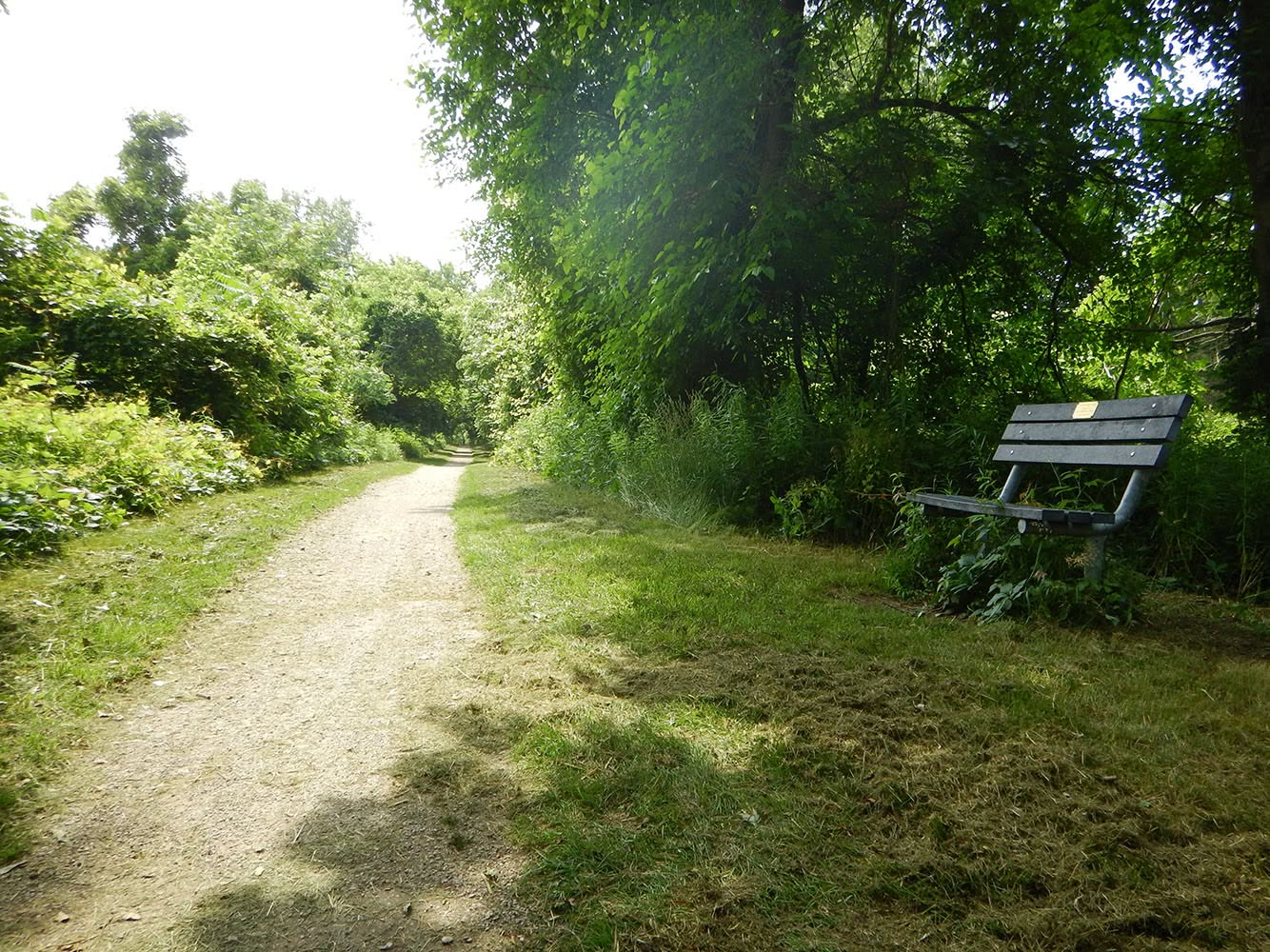
The Howard Watson Nature Trail follows a former railway corridor through Sarnia toward Camlachie. The City describes the route as 16 kilometres; Lambton Wildlife’s survey also records its railway origins and length.
You do not need to make the whole route your outing. Choose a section from the trail map, decide where to turn back, and make the old railway the subject of the walk.
What does a transport route become when trains stop using it? Here, the route has another life as a walking and cycling trail.
05 / The house by the lake
Faethorne House: one house, five lives
A few minutes from the beach, a two-storey house of yellow brick stands in a park beside the lake. The brick is Wawanosh yellow, fired in the kilns of the Telfer Road brickyard, and the house has been a family home, a rented summer retreat, a resort, a golf clubhouse and, today, the Bright’s Grove Library and the home of Gallery in the Grove.
Its first residents came out of the earliest chapter of Bright’s Grove. When rebellion broke out across Upper Canada in 1837, Robert Faethorne was commissioned a lieutenant-colonel of the local militia. He married Elizabeth Jones, daughter of Captain Henry Jones, the retired Royal Navy purser whose Maxwell settlement opens this guide, and the couple built their five-bedroom home on 120 acres of the 600 the Crown had granted Jones. Faethorne was made a full colonel in 1862, mobilised the area’s defences during the Fenian raid scares of the late 1860s, and lived at the house until his death in 1894 at the age of 95.
The house then passed to Angus Jamieson, who added six holes of golf as the game boomed in the 1890s; the Cull Drain Bridge went up nearby in his years. In 1921 a Sarnia broker, H. F. Holland, restored the house and grounds and rented “Wildwood on the Lake” to summer visitors. One of them was the London brewer John Labatt. Leaving the property one morning in 1934, he was kidnapped along the old Errol Road, Canada’s first known kidnapping for ransom, and for a while the quiet house was in every newspaper in the country.
From 1938, under Herb Crabbe Sr., Wildwood became a summer resort and golf club. When the new Lakeshore Road was built it cut straight through the course, so the golf moved to the south side of the road and became Huron Oaks, the home course where Mike Weir learned the game. By 1978 the house needed serious repair. Sarnia Township took it on, restored it, and gave it the life it has now.
Right now: the library and Gallery in the Grove are closed for renovation. Check the Lambton County Library site for the reopening before you plan a stop; the house can still be admired from outside.